
Speakers
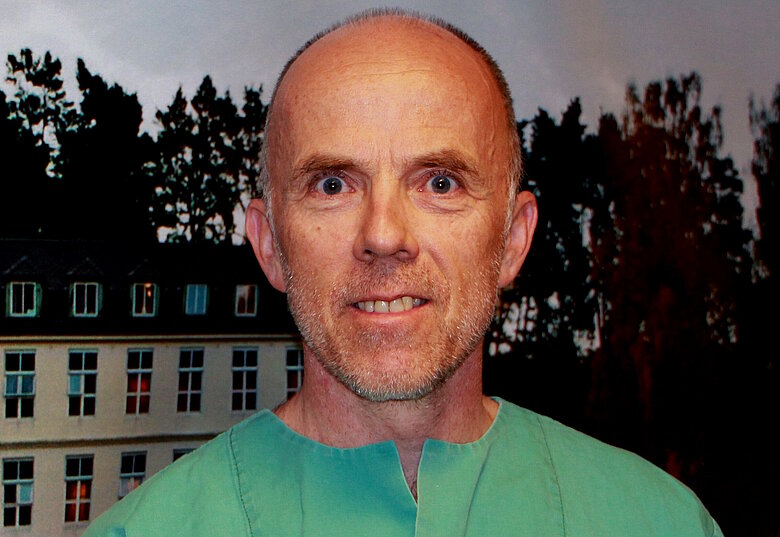
Werner Fleischer
Werner Fleischer
Werner Fleischer
Werner Fleischer holds a degree in Educational Science (Diplom-Pädagoge) with specialisations in psychology, human resources and organisational development, as well as sociology and political science. He has extensive management and leadership experience, including executive-level positions, and more than 30 years of experience in consulting, coaching and facilitation.
Since 1998, and exclusively since 2004, he has worked throughout Germany as a specialist in leadership and organisational change processes within clinics and hospitals. He is thoroughly familiar with the structures and processes of hospitals and specialist departments of widely varying sizes, organisational forms and ownership models. He has successfully supported a large number of diverse projects across Germany in a range of clinical specialties.
In particular, he has extensive expertise in restructuring, conflict resolution, team development and change management processes within intensive care units, emergency departments and operating theatres.
His areas of expertise include, across professional groups and hierarchical levels:
- Development of short- and long-term hospital objectives based on vision and strategy
- Establishment and restructuring of leadership and management structures
- Change management processes
- Gap analysis and process optimisation, particularly in operating theatres, emergency departments and intensive care units
- Preparation for and support during the assumption of new responsibilities and roles (mentoring)
- Conflict facilitation and problem solving
- Team development and team building
- Preparation for key situations such as presentations, negotiations, speeches and job interviews
- Self-management and effective working methods
- Negotiation preparation and back-office negotiation support
In all of his projects, he adopts a holistic approach. With patient welfare at the centre of his work, he consistently takes into account medical, personnel, economic, structural, procedural and ethical considerations. Through workplace shadowing, he accompanies teams during their shifts and provides immediate feedback based on his observations.
Werner Fleischer is the author of Effective Leadership – A Guide for Heads of Department and Senior Consultants (Wirksam Führen – ein Leitfaden für Chef- und Oberärzte, 2nd edition, Kohlhammer Publishing) and the six-volume series Effective Leadership in Nursing (Wirksam Führen I Pflege, Kohlhammer Publishing). He has also contributed to Management in Intensive Care Medicine (edited by Professor Kluge et al., Medizinisch Wissenschaftliche Verlagsgesellschaft) and the textbook The Intensive Care Unit (edited by Professor Burchardi et al., Thieme Publishing), drawing on his extensive consulting and coaching experience. In addition, he is the author of numerous articles published in professional healthcare journals.
He is a recognised and highly regarded speaker and moderator at medical conferences including those organised by DIVI, DGINA, DKOU, VLOU, and associations in cardiac surgery and cardiovascular technology, where he is known for providing valuable insights and setting new impulses.
Werner Fleischer is a member of the German Mediation Foundation (Deutsche Stiftung Mediation) and DGINA (the German Society for Emergency Medicine).
Christian Gansch
Christian Gansch
Christian Gansch
Christian Gansch, who was born in Austria, has an unusual career: On the one hand, he enjoyed success as a conductor of leading international orchestras; on the other, he spent fourteen years working in the music industry, where he produced over 190 CDs for Deutsche Grammophon, featuring artists such as Claudio Abbado, Lang Lang, Pierre Boulez, Anna Netrebko and Daniel Barenboim, and orchestras including the Berlin and Vienna Philharmonic Orchestras, the Metropolitan Opera in New York, and the Chicago, Boston and London Symphony Orchestras. As a producer, he has won three Grammy Awards in addition to numerous international accolades. As a conductor, he has been engaged by, amongst others, the BBC orchestras in the UK, the City of Birmingham Symphony Orchestra, the Orchestre Philharmonique de Radio France in Paris and the NHK Symphony Orchestra in Tokyo. He conducted Beethoven’s Ninth Symphony with the Orchestra Teatro La Fenice in Venice. In England, he enjoyed success as an opera conductor with Mozart’s *The Marriage of Figaro*. With his book *From Solo to Symphony – What Companies Can Learn from Orchestras*, he pioneered the trend of applying orchestral principles to business in German-speaking countries.